History

Fourteen machines
that changed everything

Electronics and robotics, in order. Every one of them took something that belonged to a few institutions and handed it to everybody. That is the whole story, and it is the thing we are trying to do next.

1946

ENIAC

Thirty tons, eighteen thousand vacuum tubes, a room of its own and a staff to match. Reprogramming it meant physically rewiring it for days. Computation existed; access to it did not. For twenty years, using a computer meant belonging to an institution that owned one.
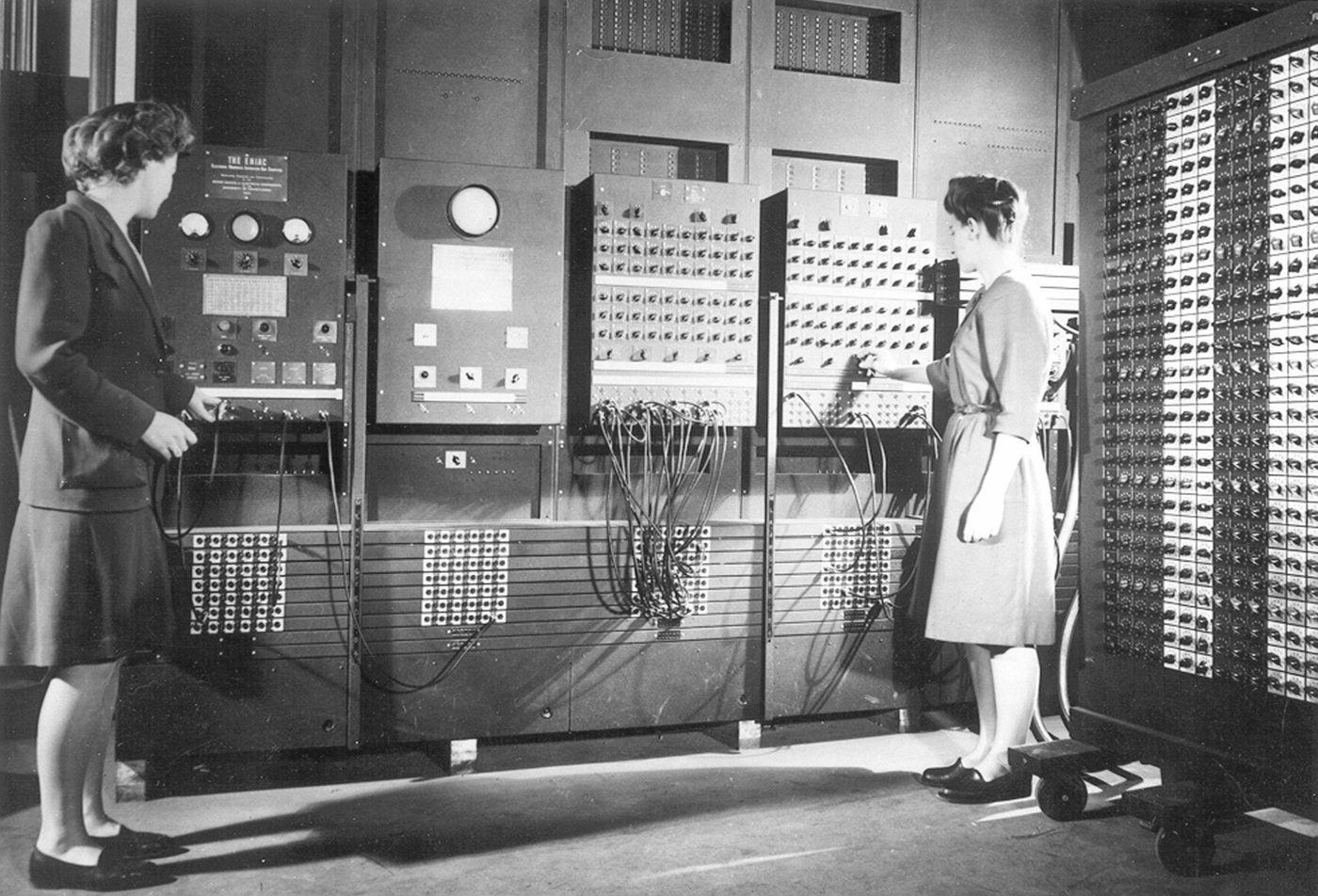
ENIAC filling a room, its vacuum-tube racks and patch cabling covering every wall.
US Army via Wikimedia Commons · public domain
1947

The transistor

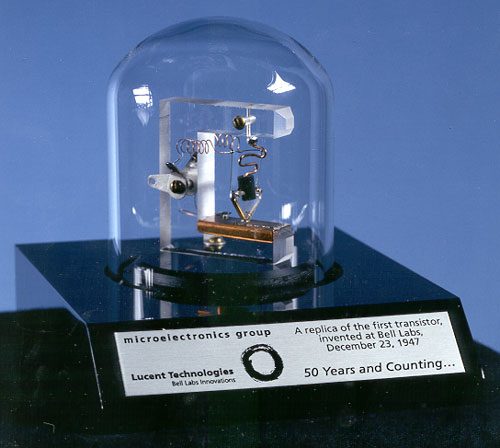
A germanium slab, a plastic wedge and two gold foil contacts. It is the most consequential object on this page, because everything after it follows from one fact: this could be made smaller, and then smaller again, more or less indefinitely.

A replica of the first point-contact transistor under a glass dome.
Wikimedia Commons · public domain
1958

The integrated circuit

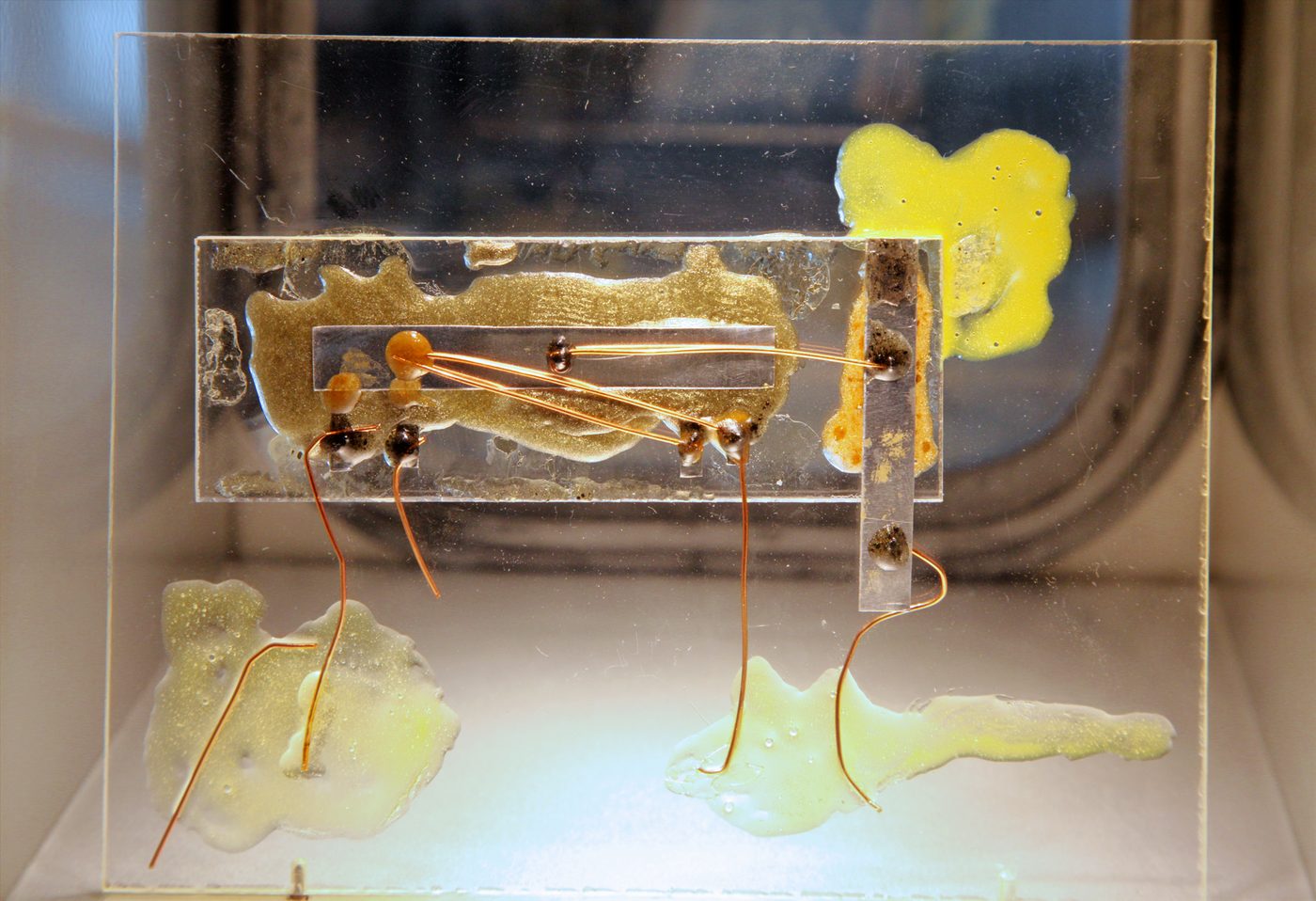
Kilby put more than one component on a single piece of semiconductor. That is the whole idea. Every chip since is that idea repeated at a scale the people in the room would not have believed.

A replica of Jack Kilby's first integrated circuit, its gold bond wires visible over the germanium bar.
Florian Schäffer via Wikimedia Commons · CC BY-SA 4.0
1961

Unimate

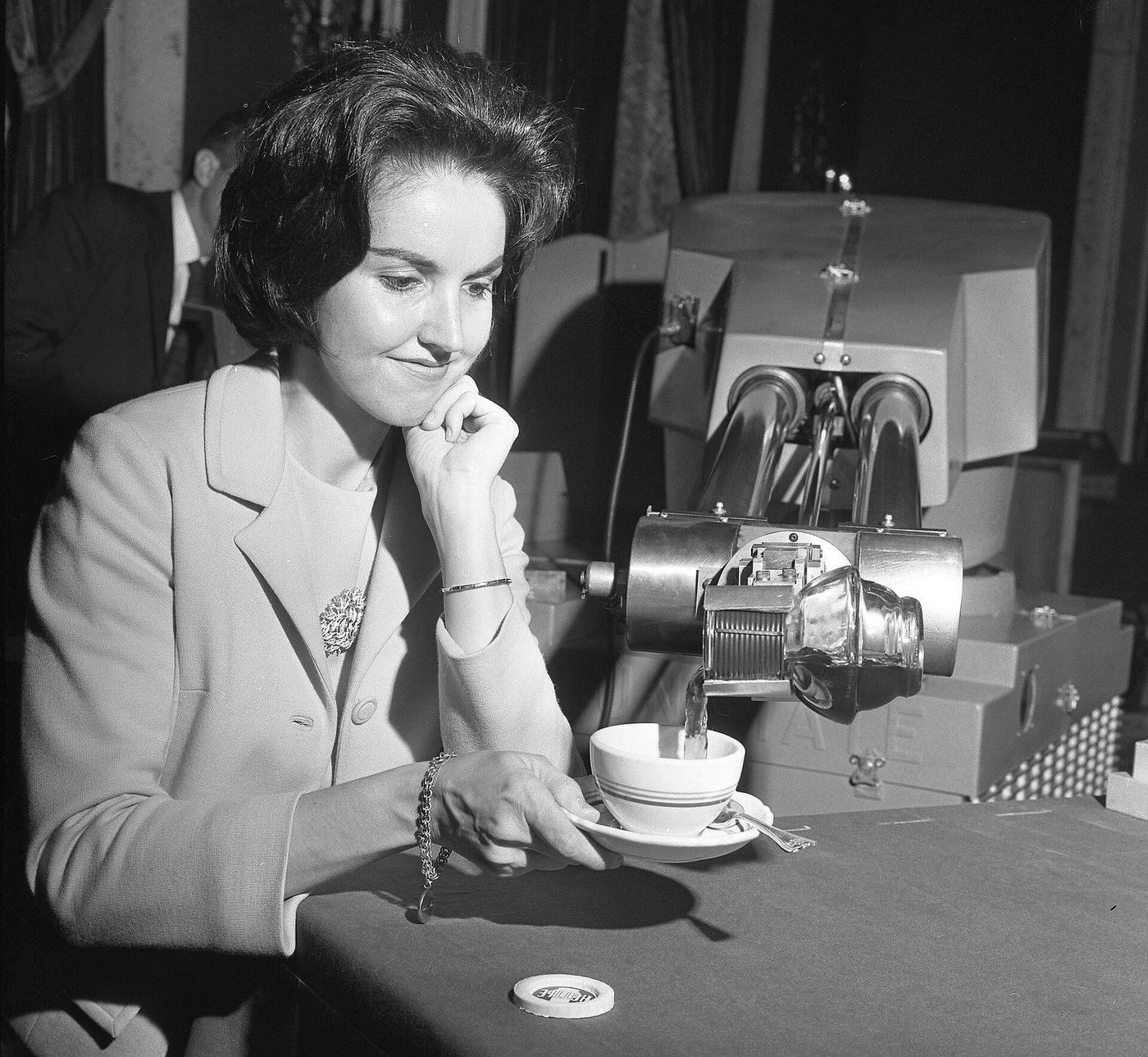
The first industrial robot went to work on a General Motors line lifting hot die castings — a job that hurt people. It is where the argument starts about what machines should do instead of us, and it has been running on factory floors ever since.

A Unimate industrial robot arm pouring coffee at a hotel demonstration in 1967.
Frank Q. Brown, Los Angeles Times · CC BY 4.0
1969

The Apollo Guidance Computer

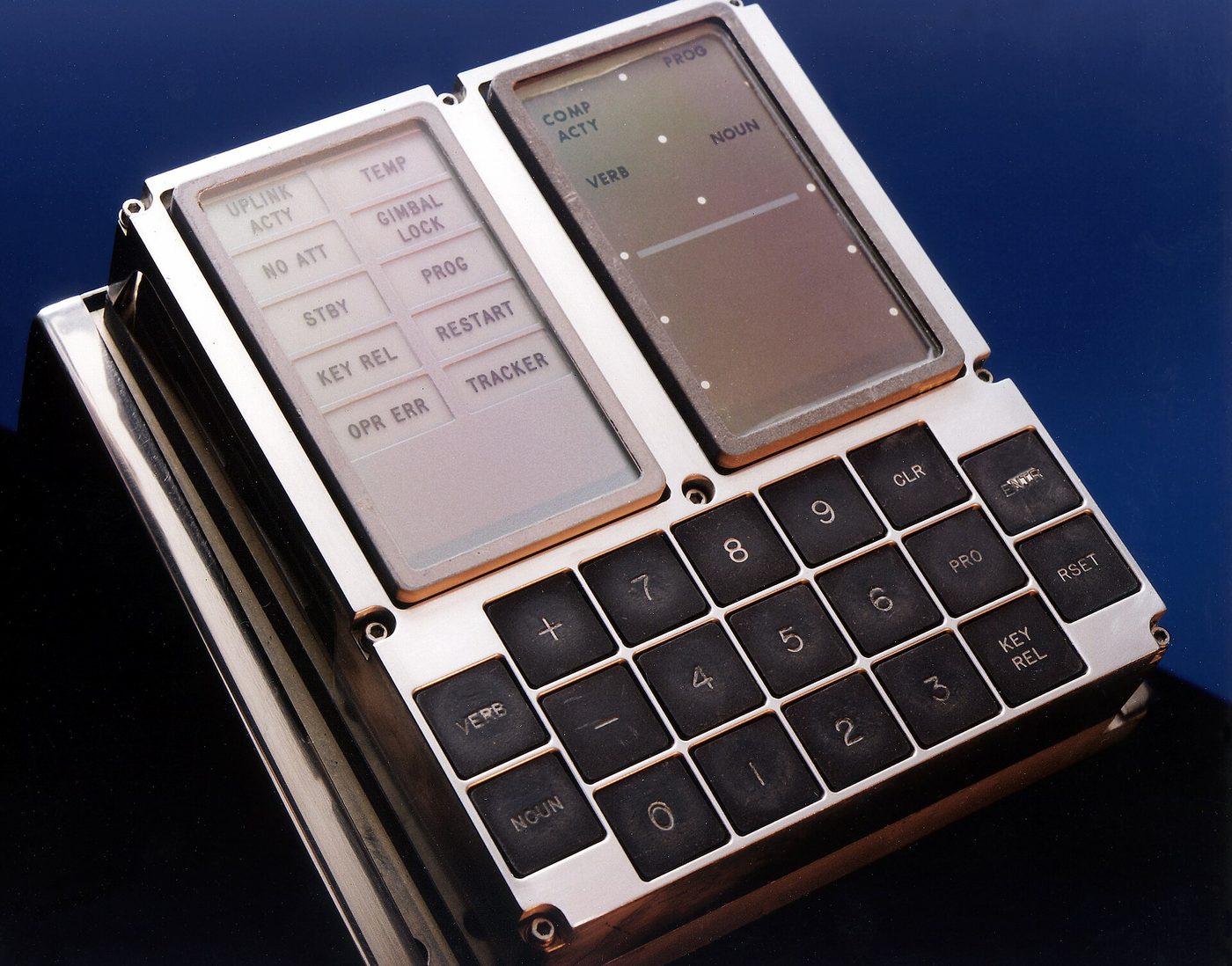
Four kilobytes of RAM, programmed by women weaving wires through magnetic cores by hand, and it landed people on the Moon. The most ambitious project in engineering history ran on less compute than a doorbell — and it worked because the people involved understood every part of it.

The Apollo display and keyboard unit, its verb-noun keypad and status lamps.
NASA / DVIDS · public domain
1971

Intel 4004

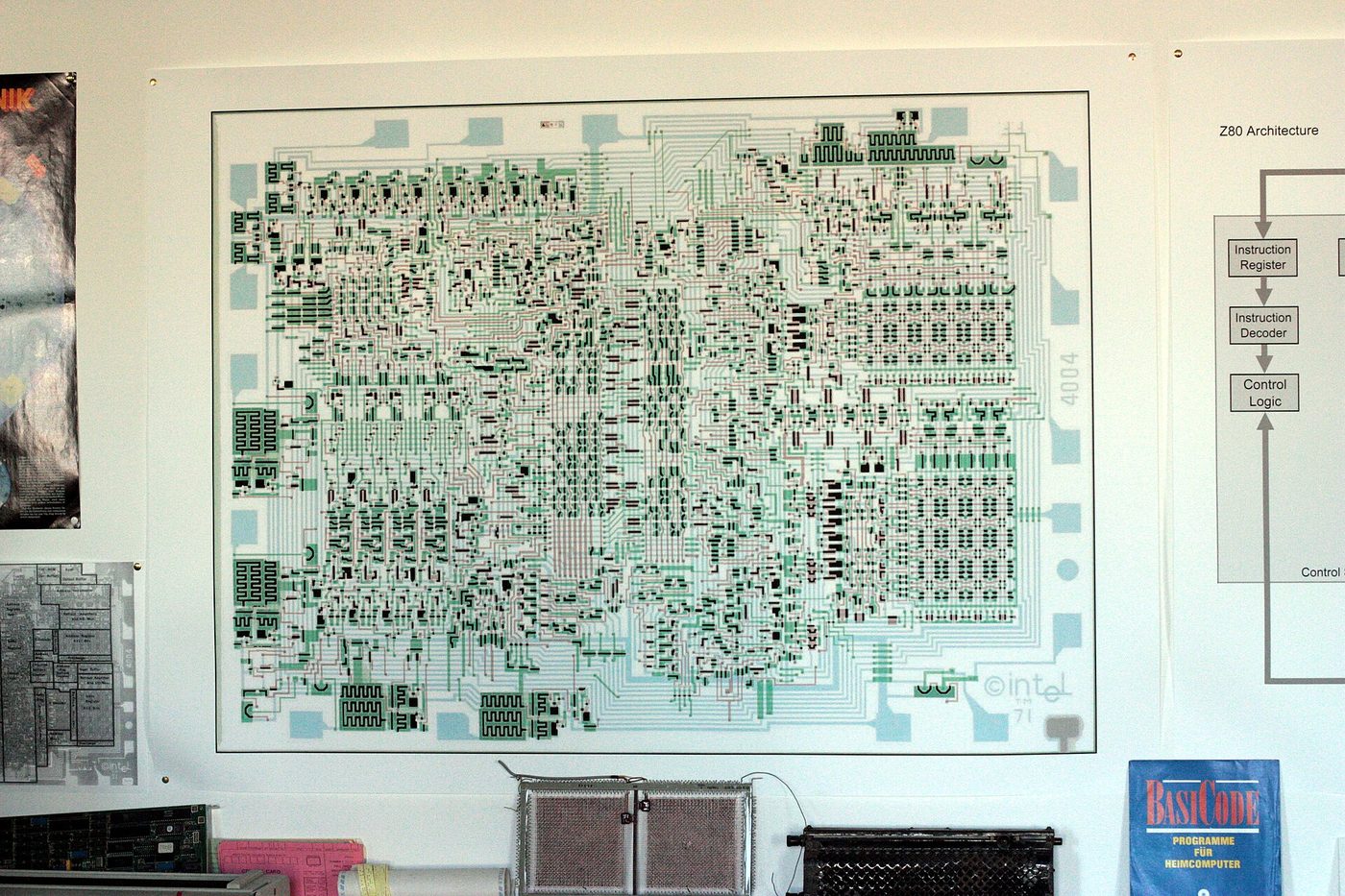
2,300 transistors, and for the first time a computer's whole processor was one part you could buy. Not a machine built for one purpose — a general-purpose engine sold by the tray. The microprocessor turns computing into a component.

The Intel 4004 chip layout drawn out at large scale, showing every transistor and interconnect.
Wolfgang Stief via Wikimedia Commons · CC0
1976

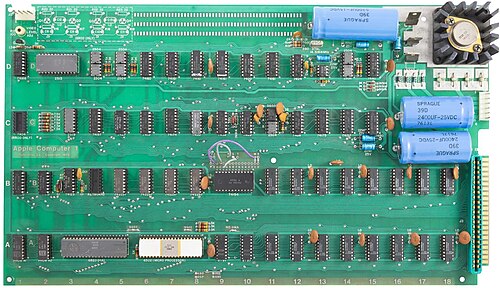
The Apple I

A bare board sold without a case, keyboard or power supply, to people expected to finish it themselves. Two hundred were made. Its importance is the assumption behind it: that one person might own a computer, and that the interesting work would be done by whoever bought it.

An original Apple I circuit board, populated with socketed chips on a plain green substrate.
Wikimedia Commons · public domain
1981

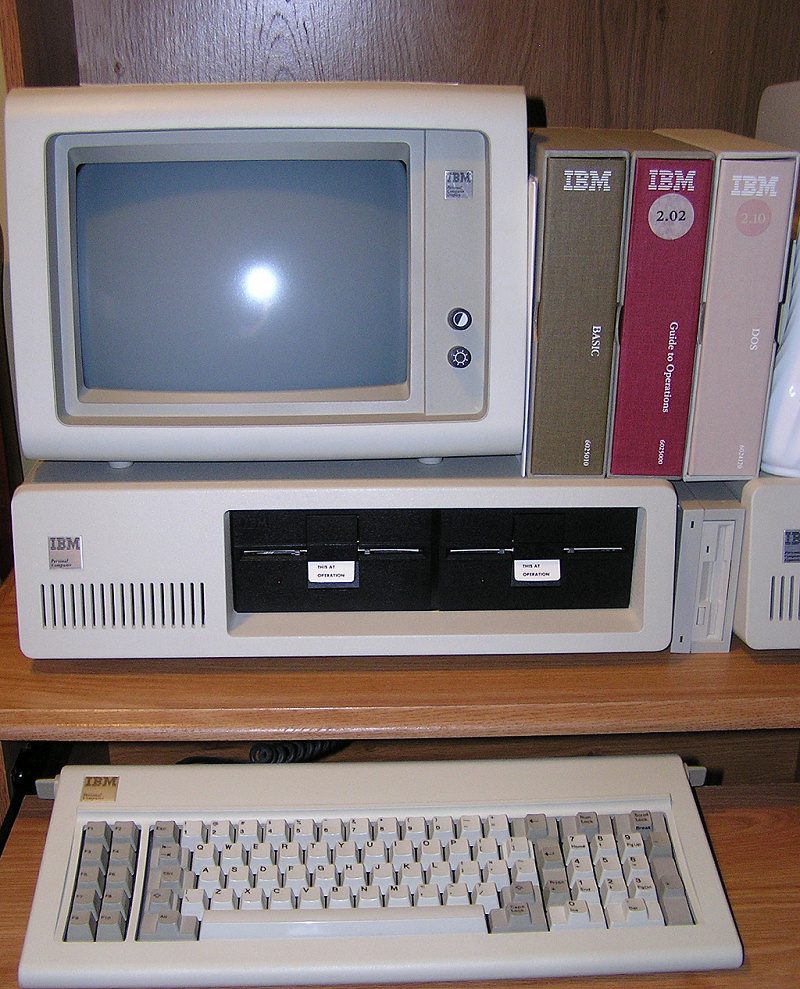
The IBM PC

Built from parts anyone could buy, with a published specification. IBM meant to sell computers and accidentally created an open platform that thousands of companies could build on. The hardware became a standard, and the standard is what actually scaled.

An IBM 5150 personal computer with its monochrome monitor and keyboard.
Wikimedia Commons · public domain
2002

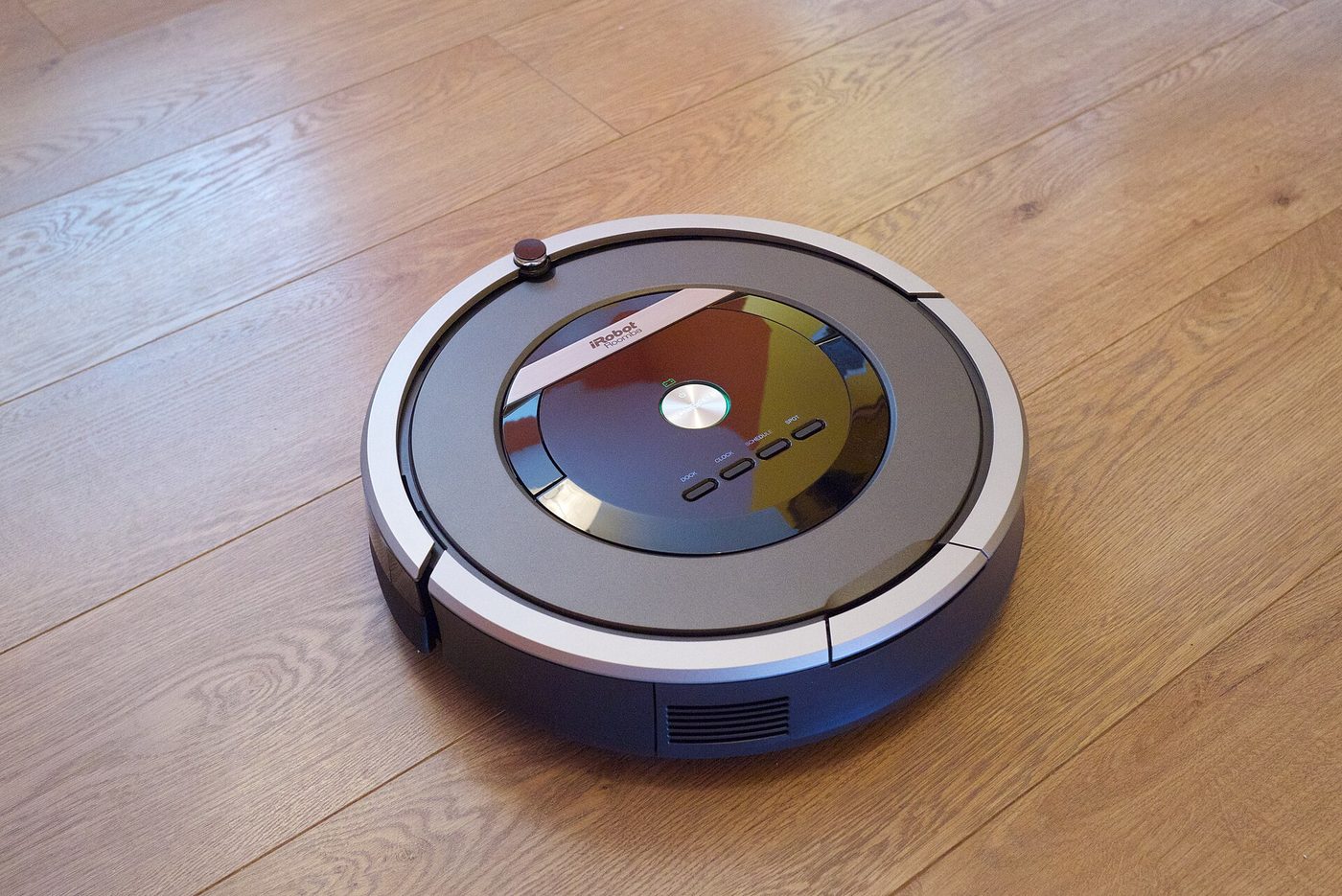
iRobot Roomba

The first robot tens of millions of people actually let into their homes. Not a demo, not a research platform — a product, at a price, doing a chore. Robotics stopped being a laboratory discipline the day one of these shipped in a box.

A Roomba robotic vacuum cleaner working across a wooden floor.
Kārlis Dambrāns via Wikimedia Commons · CC BY 2.0
2005

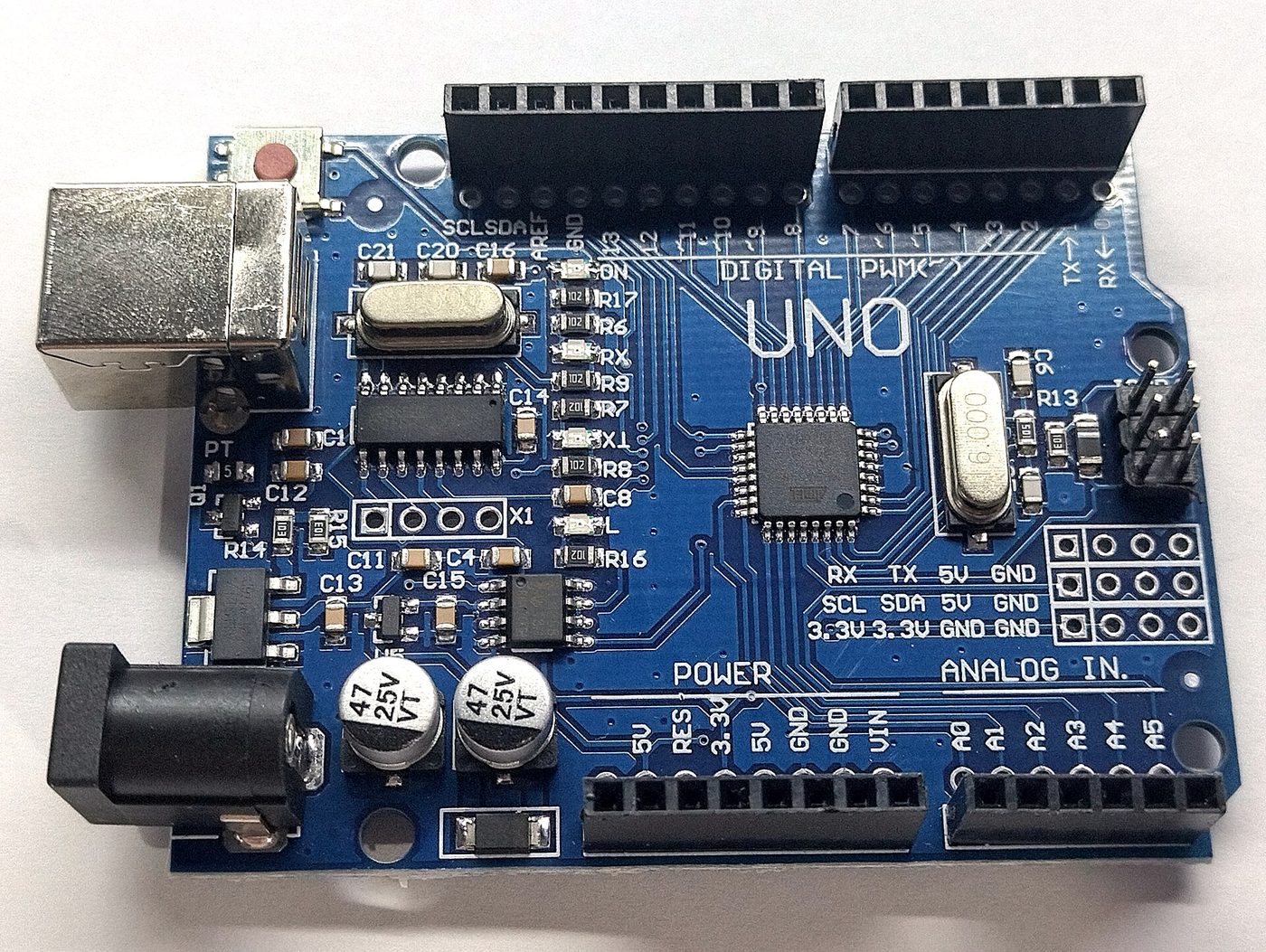
Arduino

An open board and a simple toolchain, and suddenly a designer or an artist or a fifteen-year-old could make something move. Arduino did not advance the state of the art. It collapsed the cost of entry, which turned out to matter far more.

An Arduino Uno board, its headers, microcontroller and USB connector visible.
Wikimedia Commons · CC0
2007

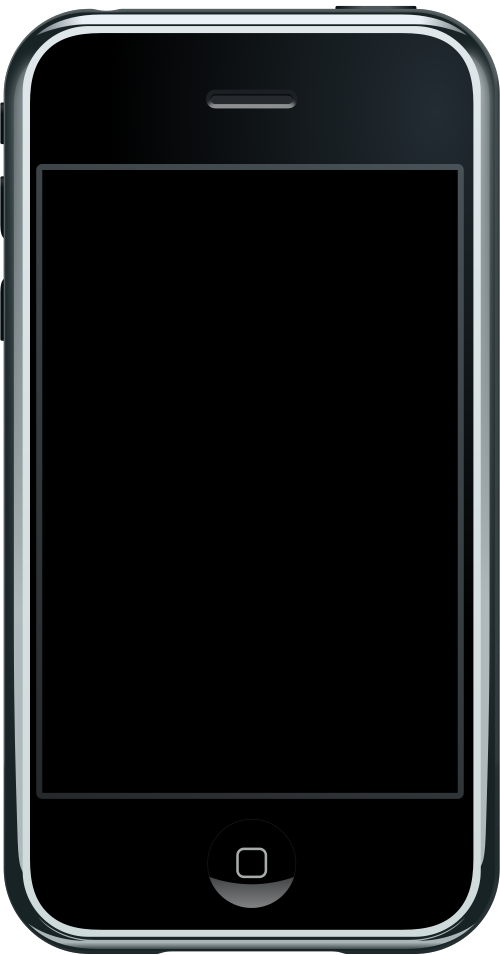
The iPhone

A supercomputer, a camera, a radio and a full sensor package, made in volumes so large that every component inside it became cheap for everybody else. The accelerometer in a hobby project costs what it costs because a billion iPhones needed one first.

An early iPhone, screen forward, showing its single home button.
Wikimedia Commons · public domain
2012

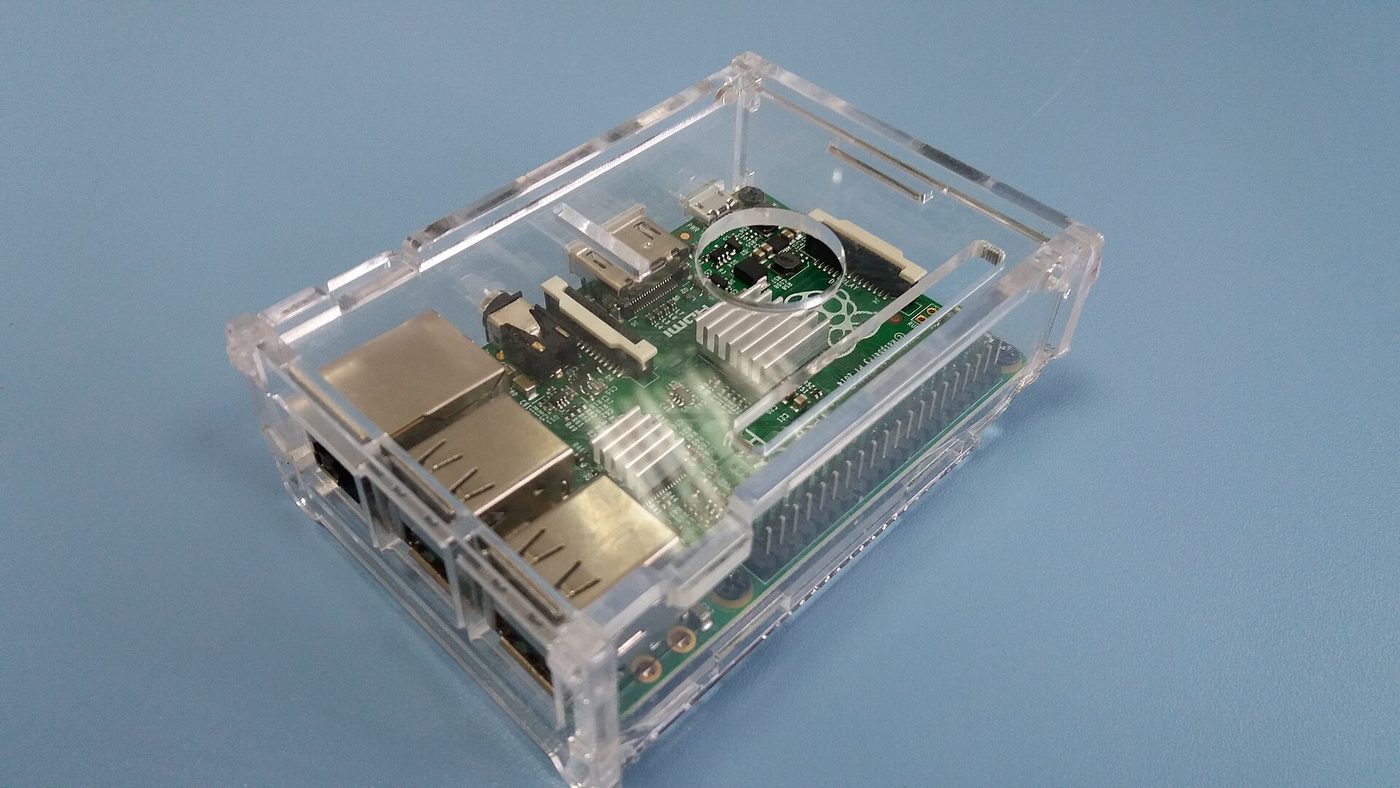
Raspberry Pi

A whole computer for the price of a textbook, with pins on the side you can wire things to. Over sixty million sold. It put a real Linux machine into projects, classrooms and products that could never have justified one before.

A Raspberry Pi single-board computer in a clear case, its ports and GPIO header visible.
Wikimedia Commons · CC BY-SA 4.0
2015

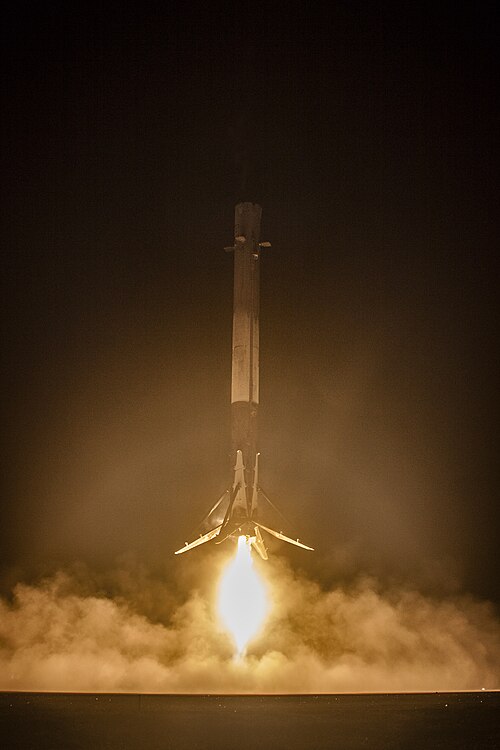
SpaceX Falcon 9

A first stage comes back and sets itself down intact. The engineering is remarkable; the economics are the point. Reuse cut the cost of reaching orbit by more than an order of magnitude in a decade, and turned space from something nations do into something a university can afford.

A Falcon 9 first stage descending under engine thrust to land, illuminated against a dark sky.
SpaceX · public domain
2020

Boston Dynamics Spot

A legged robot you can buy, that walks itself over ground no wheeled machine can cross. Forty years of locomotion research turned into a product with a price list. This is what the far end of hardware looks like when it finally ships.

A Boston Dynamics Spot quadruped robot walking alongside personnel on a road.
Senior Airman John Ennis, US Air Force · public domain
The same story, measured Six series

Everything got
cheaper. Everything.

Income per person, the price of light, transistors per chip, the cost of reaching orbit, the cost of a prototype circuit board. Five curves, one direction. It has never been cheaper or easier to build a physical product than it is right now.

01

Income per person, 1000–2025

Flat for eight centuries, then straight up.

Maddison Project / Our World in Data
02

The price of light, 1300 – 2000

Hours of work for an hour of light. Down 40,000×.

Nordhaus, 1996
03

Transistors per chip, 1970 – 2025

Eight orders of magnitude in one working lifetime.

Our World in Data
04

Cost to launch 1 kg to orbit, 1960–2025

$120,000 to $1,500 a kilogram.

CSIS Aerospace Security
05

Prototype PCB cost, 1995 – 2025

Five two-layer boards, delivered. $1,200 in 1995. $9 today. The factory does not care who you are — the quote is the same.

Historic fab pricing (JLCPCB / PCBWay) and direct quotes
06

Connected devices vs. PCB designers, 2000 – 2030

Demand for designed hardware is up two hundredfold. The number of people who can design it has gone down. That gap is the whole reason Synqit exists.

IoT Analytics; IPC workforce reports
Where this goes

The world moves when software and hardware grow at the same phenomenal speed

We have watched software do it. Every curve on this page bent upward the moment the tools stopped asking permission — a compiler, a cheap board, an open standard, a $35 computer. Hardware has never had that moment.

It is overdue. And it is the only thing standing between a person with a real problem and the object that solves it.

Now it is hardware's turn. That is what Synqit is for.

Start building Read the vision